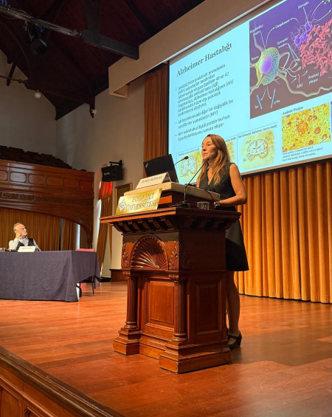
The 24th National Neuroscience Congress was held on September 10–13, 2026, at Boğaziçi University’s South Campus under the theme “Innovative Approaches from Neuroscience to Neurotechnology.” Organized by the Institute of Biomedical Engineering at Boğaziçi University with the support of the Brain Research Association, the congress brought together a broad spectrum of scientific disciplines, ranging from molecular and cellular neuroscience to cognitive and clinical neuroscience, and from neuroimaging to neurotechnology.
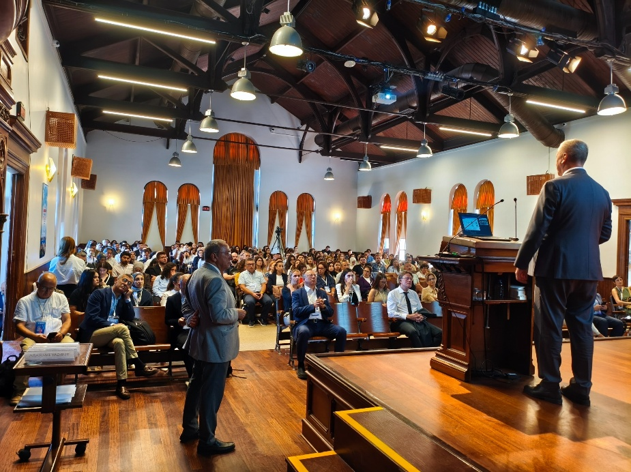
The congress welcomed 573 registered participants, with 30 undergraduate students granted free registration. The scientific program featured 7 courses, 6 invited lectures, and 20 panel sessions, while researchers presented their work through 116 oral and 139 poster presentations.
Training Day
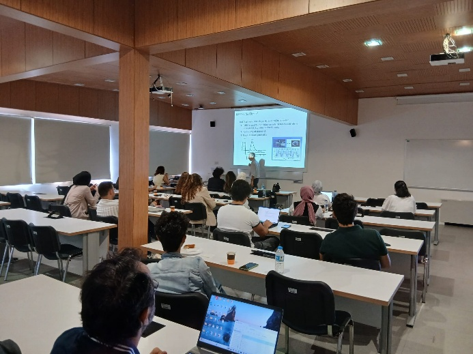
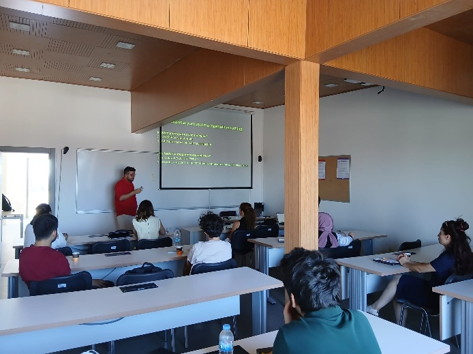
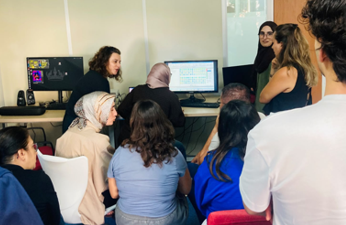
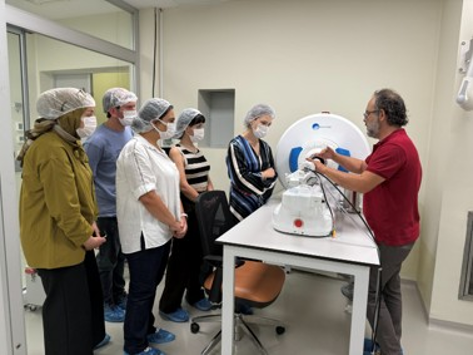
The seven courses held on September 10, as part of the Training Day, covered a broad range of methodological approaches, from motion analysis to multimodal neuroimaging, from preclinical imaging to FreeSurfer and fMRI analyses, and from Drosophila imaging to cognitive rehabilitation.
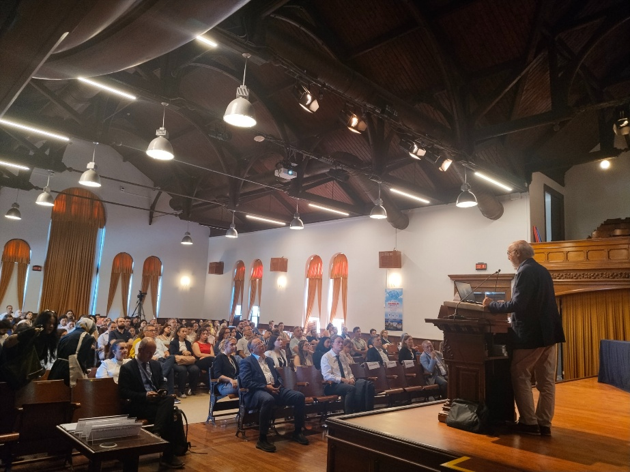
At the opening ceremony, the Rector of Boğaziçi University addressed the participants, followed by Prof. Dr. Tamer Demiralp, President of the Brain Research Association and Congress Co-Chair, who delivered the opening address on behalf of the Association.
The Congress
Prof. Dr. Ahmet Ademoğlu assumed primary responsibility for the organization of the congress, from its initial planning to its on-site coordination throughout the four-day event. As Director of the Institute of Biomedical Engineering at Boğaziçi University and Congress Co-Chair, Prof. Ademoğlu, together with his colleagues, played a pivotal role in shaping a well-integrated congress program that also drew upon the university’s diverse research facilities and infrastructure.
At the opening ceremony, Prof. Dr. Turgay Dalkara also reflected on the nearly quarter-century history and evolution of the National Neuroscience Congresses, placing the 24th Congress within the broader context of the institutional and scientific development of neuroscience in Türkiye.
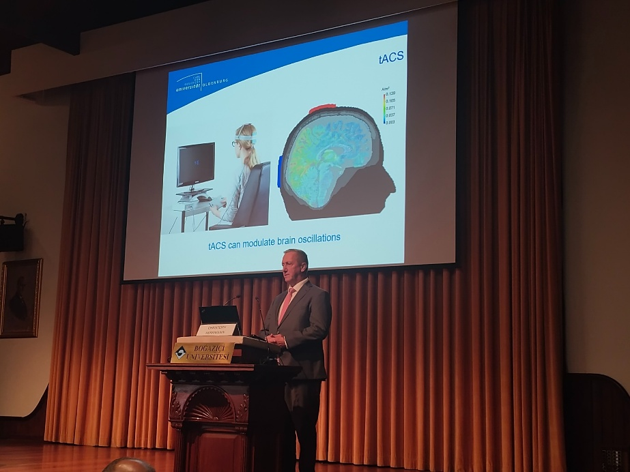
The invited lectures effectively reflected the scientific diversity of the congress. Christoph Herrmann addressed the modulation of brain oscillations through transcranial alternating current stimulation (tACS) and highlighted the importance of pre-stimulation simulations.
Turgay Dalkara discussed the need to complement knowledge gained through reductionist approaches with integrative perspectives in order to understand the extraordinary complexity of the brain.
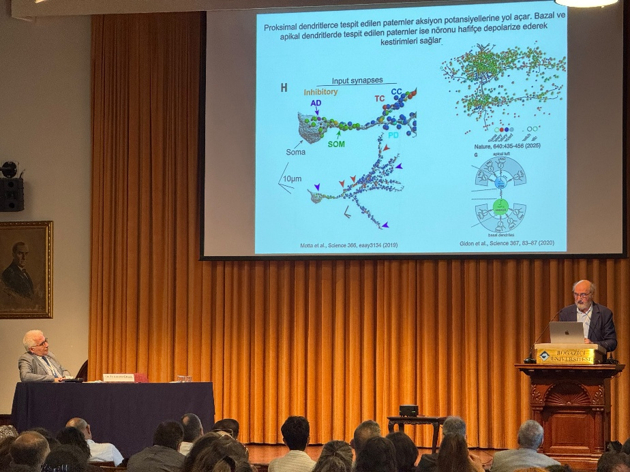
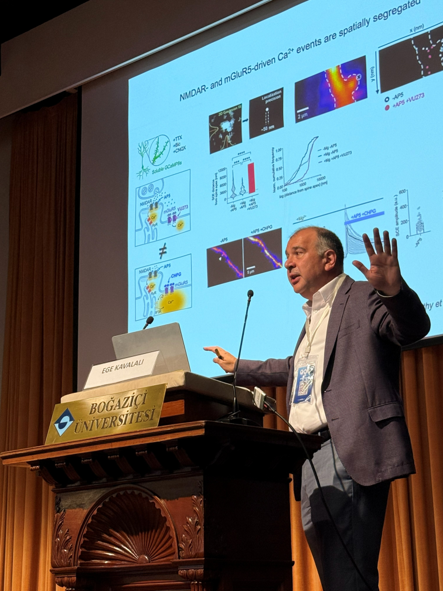
Ege Kavalalı presented recent advances in our understanding of the nanoscopic organization of synapses and highlighted their significance for elucidating synaptic communication and disease mechanisms.
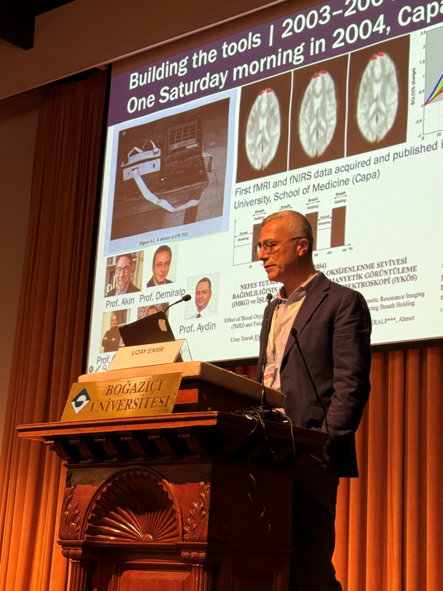
Uzay Emrah Emir explored the future of functional, metabolic, and molecular imaging through emerging MRI and MRSI techniques, while also reflecting on the roots of his own scientific journey in early neuroimaging research at Boğaziçi University and Istanbul University.
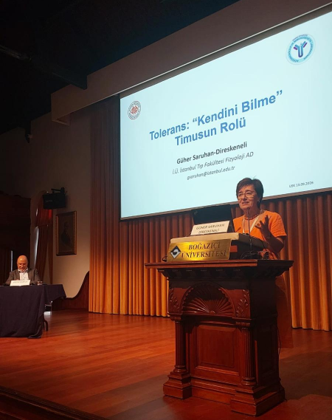
Güher Saruhan-Direskeneli, a founding member of the Brain Research Association and a dedicated contributor to its activities over many years, discussed the role of the thymus in immune tolerance and its implications for myasthenia gravis.
Derneğin daha genç kuşak üyelerinden Duygu Gezen-Ak ise amiloid beta’nın yalnızca patolojik birikim olarak değil, gen ekspresyonunu etkileyebilen olası bir düzenleyici olarak değerlendirilmesine ilişkin yeni bulgularını paylaştı.